Energy Saving Mode T-Shirt Design: Humor Meets Modern Merch
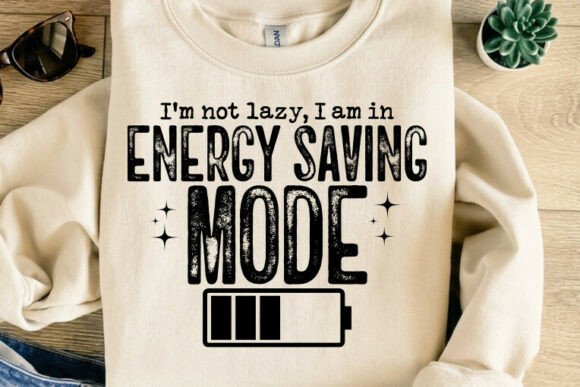
Let's be honest. We've all had those days—the ones where the couch seems magnetically attractive and the idea of "productive" feels like a foreign concept. It's a universally relatable feeling, and that's precisely the genius behind the Energy Saving Mode T-Shirt Design. This isn't just another graphic; it's a wearable inside joke, a badge of honor for introverts, procrastinators, and anyone who appreciates a good, self-deprecating laugh. The design featuring the phrase "I'm Not Lazy, I Am in Energy Saving Mode" taps directly into a modern cultural moment, blending sarcastic humor with a clean, contemporary aesthetic that works far beyond a simple tee.
More Than a Funny Shirt: The Anatomy of a Relatable Design
What makes this particular energy saving mode concept so effective? Its strength lies in the balance between text and visual simplicity. The design doesn't rely on overly complex illustrations. Instead, it uses bold, clear typography as its primary visual element. This approach is incredibly versatile. The phrase itself is the star, making it instantly readable and understood from a distance—crucial for merchandise like t-shirts, phone cases, and stickers.
The humor is specific enough to feel personal yet broad enough to connect with a massive audience. It speaks to:
- The Self-Aware Introvert: Who uses humor to navigate social energy levels.
- The Overwhelmed Professional: Who fantasizes about a literal "low power" mode.
- The Student or Gamer: Familiar with the technical term and happy to apply it to life.
This relatability is marketing gold. For small business owners and creators, using a design that already has an established emotional connection with an audience can significantly boost engagement and sales.
From File to Finished Product: Practical Applications for Your Business
The true value of a premium design asset like this lies in its application. The provided file package—EPS, PNG, and SVG formats in high-resolution (4500px x 5400px) with a transparent background—is built for commercial use. This isn't clip art; it's production-ready artwork. Let's break down how you can deploy it.
For the Print-on-Demand Entrepreneur: This is your bread and butter. Upload the PNG directly to platforms like Printful, Printify, or Redbubble. The transparent background means it will layer perfectly over any shirt color. Think beyond basic tees: apply it to mugs, tote bags, pillows, and phone cases. The sarcastic tone is perfect for gift markets, especially around holidays like Christmas or birthdays when people look for humorous, personality-driven presents.
For the Brand Strategist & Social Media Manager: A consistent visual voice is key. Use the design as a recurring motif in your social media graphics. Imagine an Instagram story series where "Energy Saving Mode" is the theme for a Friday afternoon post, or a meme template for engaging with your audience about work-life balance. The clean aesthetic makes it easy to integrate into various layouts without clashing with your existing brand fonts and colors.
For the Physical Goods Seller & Crafter: If you sell at local markets or on Etsy, this design can become a signature piece. Use the SVG file with a cutting machine like a Cricut or Silhouette to create high-quality vinyl decals for mugs, laptop skins, or car windows. The scalability of the vector file ensures it looks crisp at any size, from a small sticker to a large poster.
Building a Cohesive Brand with a Singular Concept
Consistency builds recognition. By anchoring a product line or a marketing campaign around a strong, singular concept like this funny quote shirt, you create a thematic thread. Your store could feature a whole "Energy Saving" collection: the t-shirt, a matching coffee mug ("Fueling Up from Energy Saving Mode"), a notebook ("Notes from Energy Saving Mode"), and a laptop sticker. This transforms a single product into a brand story, encouraging customers to buy multiple items and increasing your average order value.
When selecting supporting fonts for your product descriptions, website headers, or packaging, consider pairing. The main design's typography is likely bold and straightforward. Complement it with a clean sans-serif font for body text to maintain readability, or a script font sparingly for a touch of personal flair on thank-you cards or special edition tags. The goal is visual consistency that makes your brand look professional and intentional, not just a collection of random designs.
Choosing Your Arsenal: Why File Formats Matter
Not all design files are created equal. Understanding the included formats ensures you use them correctly and maintain quality.
- PNG: Your workhorse for digital and most print-on-demand. The high resolution (4500px x 5400px) is perfect for large-scale printing, and the transparent background is non-negotiable for placing the design on colored products.
- SVG: The vector king. Use this for any application that requires resizing without quality loss, like laser engraving, vinyl cutting, or if you need to adjust the design in a vector program like Adobe Illustrator. It's essential for creating scalable brand identity elements.
- EPS: Another vector format, highly compatible with professional design software. This is your go-to for complex edits or if you're integrating the design into larger print materials like posters, banners, or editorial layouts.
Having all three gives you ultimate flexibility, from a quick Etsy listing to a professionally printed banner for a trade show booth.
The Final Thought: Design That Connects and Converts
In a crowded marketplace of sarcastic shirts and humor t-shirts, the "Energy Saving Mode" design stands out because it's more than just a joke—it's a feeling. It's a moment of shared understanding between you and your customer. For designers and entrepreneurs, it represents a turnkey solution: a premium, creative asset that saves you development time while offering a product with proven emotional appeal. It’s a smart, efficient way to add a line of merchandise that doesn’t just sell, but also speaks directly to the modern human experience of managing our most precious resource: energy.